Technology is at the heart of every modern business. From employee laptops and desktops to servers, networking equipment, storage devices, and data center infrastructure, organizations invest heavily in IT assets to support daily operations. However, as technology evolves, these assets eventually reach the end of their useful life.
What happens next is just as important as how they were deployed.
Simply storing obsolete equipment in a warehouse or disposing of it without a structured process can expose organizations to data security risks, compliance challenges, operational inefficiencies, and lost asset value.
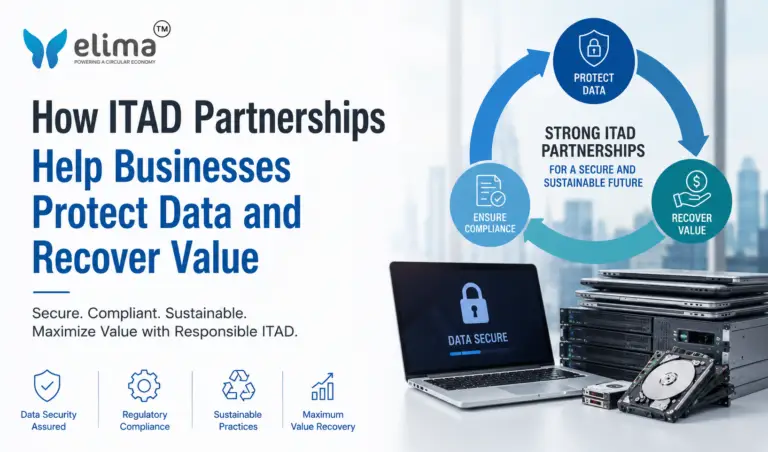
This is where IT Asset Disposition services become essential. A well-planned ITAD strategy helps businesses retire technology securely while recovering value through refurbishment, reuse, responsible recycling, and material recovery.
Whether you’re a growing business or a large enterprise, partnering with an experienced provider for Enterprise IT Asset Disposition ensures your retired assets are handled responsibly from collection to final reporting.
IT Asset Disposition (ITAD) refers to the structured process of retiring IT equipment securely, responsibly, and efficiently after it reaches the end of its operational lifecycle.
Unlike simple disposal, ITAD focuses on protecting sensitive information, maximizing asset value, meeting compliance requirements, and ensuring responsible resource recovery.
Professional IT Asset Disposition services typically include:
For organizations managing large technology estates, Corporate IT Asset Disposal is not just an operational task—it is an important part of IT governance and lifecycle management.
Every technology refresh generates retired equipment. Without a structured disposition strategy, businesses can lose valuable assets while increasing operational and compliance risks.
A comprehensive ITAD program addresses multiple business priorities simultaneously.
Retired laptops, servers, storage devices, and desktops often contain confidential customer information, financial records, intellectual property, and employee data.
Even equipment that appears unusable can still store recoverable information. This makes Secure IT Asset Disposal one of the most critical aspects of retiring enterprise technology.
Certified data sanitization and destruction processes help ensure sensitive information is permanently removed before assets are refurbished or recycled.
Many industries operate under strict data protection and environmental regulations. Organizations must demonstrate that retired IT equipment has been managed responsibly through documented processes.
Working with an experienced ITAD partner provides audit trails, certificates, inventory reports, and documentation that support internal governance and external compliance requirements.
Not every retired device has reached the end of its useful life.
Many assets can be tested, refurbished, upgraded, and redeployed or remarketed, allowing organizations to recover value instead of treating every retired device as waste.
A structured ITAD strategy transforms obsolete hardware into an opportunity for value recovery.
Large organizations often manage thousands of IT assets across multiple offices, branches, warehouses, or data centers.
Professional IT Asset Disposition services simplify collection, transportation, inventory management, reporting, and processing through a standardized lifecycle approach.
Treating retired technology as ordinary waste can create significant business risks.
Improperly disposed storage devices remain one of the leading causes of preventable data exposure.
Hard drives, SSDs, backup systems, and servers may still contain sensitive information if secure data sanitization has not been completed.
Failure to dispose of electronic equipment through documented processes can create compliance challenges during audits and regulatory reviews.
Organizations should ensure that End of life IT asset disposal follows applicable environmental and data management requirements.
Many businesses overlook the residual value of retired IT equipment.
Devices that are still functional—or can be refurbished—may generate financial returns when processed through structured ITAD programs.
Electronic equipment contains valuable materials that should be recovered wherever possible.
Responsible disposition prioritizes refurbishment and material recovery before recycling, helping reduce unnecessary extraction of new resources while supporting a more circular technology ecosystem.
Effective ITAD is a structured lifecycle rather than a single disposal event.
Retired IT equipment is collected from offices, warehouses, branch locations, or data centers through secure logistics.
Every asset is documented and tracked to maintain complete visibility throughout the disposition process.
Before any equipment moves forward, storage media undergo certified erasure or physical destruction where required, ensuring Secure IT Asset Disposal for sensitive business information.
Assets are assessed to determine whether they can be refurbished, redeployed, remarketed, or recycled.
Devices that remain functional are repaired, upgraded where appropriate, tested, and prepared for a second lifecycle.
Extending product life helps organizations recover greater value while reducing unnecessary waste.
Equipment that cannot be refurbished is dismantled responsibly so valuable materials can be recovered through specialized recycling processes.
This stage forms an important part of IT Equipment Disposal services, ensuring end-of-life devices are managed responsibly while maximizing material recovery.
Many organizations view retired IT equipment as a cost center. In reality, a structured ITAD program can unlock operational, financial, and environmental value by extending the lifecycle of technology assets before they reach the recycling stage.
Not every laptop, desktop, or server is ready for recycling. Many devices still have residual value and can be refurbished, repaired, upgraded, or redeployed within the organization.
This approach reduces replacement costs while maximizing returns from existing technology investments.
Old IT equipment often occupies valuable warehouse or office space for months or even years because businesses are unsure how to dispose of it securely.
A structured End of life IT asset disposal program removes obsolete equipment efficiently, freeing up storage space and improving inventory management.
Professional ITAD providers maintain detailed asset records throughout the disposition process.
Inventory reports, serial number tracking, data destruction certificates, and disposition reports help organizations maintain complete visibility of retired equipment.
Devices that cannot be refurbished still contain valuable materials such as aluminium, copper, steel, engineering plastics, and precious metals.
Recovering these materials through responsible recycling reduces dependence on virgin resources while supporting a more circular economy.
Selecting the right IT Asset Disposal company is about much more than arranging equipment collection. The right partner should be able to protect your data, maximize asset value, and manage the complete lifecycle of retired technology.
When evaluating providers, consider the following capabilities.
Every organization should ensure sensitive information is permanently removed before assets leave their control.
Certified data sanitization and destruction processes are fundamental to Secure IT Asset Disposal, helping minimize data security risks and strengthen regulatory compliance.
Businesses operating across multiple locations benefit from partners that can coordinate secure collections through standardized processes.
Leading ITAD services India providers offer nationwide logistics, allowing organizations to manage retired assets consistently regardless of location.
An experienced IT Hardware Disposal company should always assess equipment for refurbishment before recycling.
Extending the useful life of IT assets maximizes value recovery and helps reduce unnecessary disposal.
Look for providers that offer:
These records provide confidence throughout the asset disposition process.
At ELIMA, we believe retired IT assets should be managed as part of a structured lifecycle—not treated simply as obsolete equipment.
Our IT Asset Lifecycle Management approach combines secure disposition with refurbishment, reverse logistics, responsible recycling, and material recovery to maximize value from every asset.
Our capabilities include:
Rather than focusing only on disposal, ELIMA helps organizations recover value, strengthen compliance, and improve visibility throughout the lifecycle of their IT assets.
What are IT Asset Disposition services?
IT Asset Disposition services help organizations securely retire outdated IT equipment through collection, inventory management, data sanitization, refurbishment, resale, recycling, and compliance reporting.
Why is Secure IT Asset Disposal important?
Retired devices often contain confidential business information. Secure data sanitization and documented handling processes help prevent unauthorized access and reduce the risk of data breaches.
What assets are covered under Enterprise IT Asset Disposition?
Enterprise ITAD programs typically include:
What happens to retired IT equipment?
Every asset is evaluated individually. Depending on its condition, it may be refurbished, redeployed, remarketed, dismantled for parts, or responsibly recycled to recover valuable materials.
How do IT Equipment Disposal services support businesses?
Professional IT Equipment Disposal services help organizations simplify technology refresh cycles while improving security, compliance, reporting, and asset value recovery.
Why should businesses choose professional ITAD services India?
Experienced ITAD services India providers offer standardized processes, nationwide collection capabilities, secure data handling, enterprise reporting, refurbishment expertise, and responsible end-of-life asset management.
Retiring technology is no longer just an operational requirement—it is a strategic opportunity to strengthen security, improve compliance, recover value, and manage resources more responsibly.
A well-planned Enterprise IT Asset Disposition program helps organizations protect sensitive information, extend the useful life of technology through refurbishment, and ensure responsible End of life IT asset disposal when equipment can no longer be reused.
Whether you’re looking for an experienced IT Asset Disposal company, evaluating IT Hardware Disposal company capabilities, or exploring reliable ITAD services India, choosing a lifecycle-focused partner can help transform retired technology into measurable business value.
At ELIMA, we help organizations manage every stage of the IT asset lifecycle—from secure collection and data sanitization to refurbishment, reverse logistics, responsible recycling, and material recovery—ensuring that every asset reaches its highest-value outcome before its lifecycle ends.