
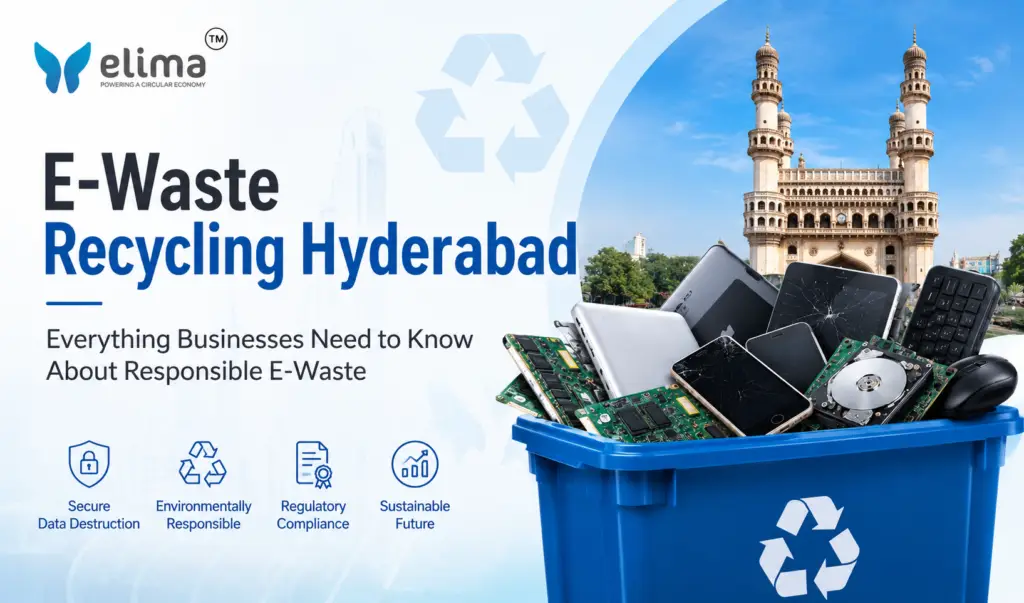
Hyderabad has emerged as one of India’s leading technology and manufacturing hubs. With thousands of IT companies, electronics manufacturers, educational institutions, healthcare facilities, startups, and enterprises upgrading their technology every few years, the amount of discarded electronic equipment continues to rise.
Computers, laptops, servers, networking devices, printers, batteries, and other electronic equipment eventually reach the end of their usable life. Without proper handling, these assets can lead to data security risks, compliance challenges, and the loss of valuable recoverable materials.
This is where e-waste recycling Hyderabad plays a critical role. A structured approach to e-waste recycling helps organizations manage obsolete electronics responsibly while recovering valuable resources through certified recycling and refurbishment processes.
Whether you’re an enterprise managing thousands of IT assets or a growing business looking for reliable e waste management services, partnering with an experienced recycler ensures electronic assets are collected, processed, and documented responsibly.
Electronic waste, commonly known as e-waste, refers to electrical and electronic equipment that is no longer in use or has reached the end of its lifecycle.
Common examples include:
Many of these devices contain reusable materials such as copper, aluminium, steel, plastics, and precious metals. However, they also contain components that require responsible processing to prevent environmental contamination.
This makes e waste management an essential part of responsible business operations rather than simply disposing of old equipment.
Technology refresh cycles have become much shorter over the last decade. Businesses replace devices more frequently to improve performance, enhance cybersecurity, and support evolving software requirements.
Without responsible e-waste recycling, obsolete electronics often end up in informal disposal channels where valuable materials are lost and components may not be handled safely.
Professional recycling offers several important benefits.
Electronic equipment contains materials that can be recovered and reintroduced into manufacturing. Recovering these resources reduces dependence on newly extracted raw materials and supports a more efficient material economy.
A structured e waste management process ensures assets are collected, tracked, dismantled, refurbished where possible, and recycled through appropriate channels.
Organizations are expected to manage retired electronic assets responsibly. Working with certified e waste management services providers helps simplify documentation and compliance requirements.
Instead of viewing obsolete electronics as waste, organizations can recover usable products, reusable components, and valuable materials through refurbishment and recycling.
Hyderabad has become one of India’s fastest-growing technology ecosystems.
Major sectors contributing to electronic waste generation include:
As these industries continue to expand, the demand for reliable e-waste recycling Hyderabad services also increases.
Organizations today require more than simple collection. They look for partners capable of managing the complete lifecycle of retired assets, including secure logistics, refurbishment, recycling, reporting, and material recovery.
This has led many businesses to evaluate experienced e waste recycling companies in Hyderabad that can support enterprise-scale operations while maintaining transparency throughout the recycling process.
Most electronic equipment generated by homes, businesses, institutions, and industries can be processed through professional recycling programs.
Common categories include:
Each category requires different handling procedures depending on its condition, recoverable value, and recycling requirements.
Professional e-waste recycling is much more than collecting unwanted electronics. It is a structured process that focuses on maximizing value recovery while ensuring responsible handling throughout the asset lifecycle.
The process begins with collecting electronic assets from offices, warehouses, manufacturing units, educational institutions, retail stores, or data centers.
Collections are planned to ensure assets are transported safely while maintaining inventory visibility.
Every asset is identified, documented, and verified before further processing.
Maintaining accurate records improves traceability and provides organizations with greater visibility into their retired IT assets.
Before any device is refurbished or dismantled, storage media undergo secure data sanitization or physical destruction based on organizational policies.
For enterprises handling confidential information, this is one of the most important stages in the recycling process.
Not every device needs to be recycled immediately.
Equipment that can still perform reliably may be refurbished, tested, and prepared for a second lifecycle. Extending product life helps maximize the value of existing assets while reducing unnecessary disposal.
Devices that cannot be refurbished move to material recovery.
Components are dismantled carefully so valuable resources such as metals, plastics, and electronic materials can be recovered and reintroduced into manufacturing wherever possible.
This approach supports modern e waste management solutions by recovering resources instead of treating electronic equipment simply as discarded waste.
Choosing professional e waste management services goes beyond simply disposing of old electronics. A well-managed process helps organizations improve operational efficiency, strengthen compliance, and recover greater value from retired assets.
Business devices often contain confidential information, making secure handling a priority. Professional recyclers follow documented processes for collection, transportation, inventory management, and data sanitization to ensure assets are managed responsibly.
Electronic devices contain materials such as copper, aluminium, steel, engineering plastics, and precious metals. Through responsible recycling and urban mining practices, these resources can be recovered and reintroduced into manufacturing, reducing the need for virgin raw materials.
Businesses are expected to dispose of electronic equipment through authorized channels. Working with certified e waste management services providers helps organizations maintain records, support audits, and meet applicable compliance requirements.
Not every retired device needs to be dismantled immediately. Many assets can be refurbished and returned to productive use, extending their lifecycle before they are eventually recycled.
Instead of coordinating with multiple vendors for collection, transportation, refurbishment, and recycling, organizations benefit from integrated e waste management solutions that simplify the entire process.
With several e waste recycling companies operating across India, selecting the right partner requires more than comparing collection costs. Businesses should evaluate the company’s capabilities, compliance standards, and lifecycle expertise.
Here are some key factors to consider:
Choose a recycler that operates under applicable regulatory requirements and follows standardized processes for handling electronic assets.
Managing a few office laptops is very different from handling thousands of enterprise IT assets spread across multiple locations. Look for organizations with experience in enterprise asset recovery and reverse logistics.
A capable recycling partner should evaluate assets for refurbishment before recycling them. Extending the usable life of equipment helps maximize value recovery and supports a more circular approach to asset management.
Inventory reports, certificates, asset tracking, and compliance documentation provide visibility throughout the recycling process.
Many organizations have operations across multiple cities. Instead of working with separate e waste management companies in Hyderabad and e waste management companies in Bangalore, businesses often prefer a partner that can deliver standardized services across India through a single point of coordination.
E waste EPR (Extended Producer Responsibility) plays an important role in India’s electronic waste ecosystem.
Under EPR, producers of electrical and electronic equipment are responsible for ensuring that end-of-life products are collected and processed responsibly through authorized recycling channels.
An effective e waste EPR program generally includes:
For manufacturers, brands, importers, and producers, partnering with an experienced recycler simplifies the implementation of EPR obligations while improving transparency throughout the asset lifecycle.
At ELIMA, we believe electronic assets deserve more than disposal. They deserve a structured lifecycle approach that prioritizes refurbishment, responsible recycling, and resource recovery.
Our services are designed to help organizations manage electronic assets efficiently through every stage of their lifecycle.
Our capabilities include:
Rather than focusing solely on recycling, ELIMA helps businesses maximize the value of electronic assets before they reach the end of their lifecycle.
This approach enables organizations to improve operational efficiency while supporting responsible e waste management practices.
Organizations increasingly prefer working with experienced e waste recyclers in India that provide consistent services across multiple locations.
Whether operations are based in Hyderabad, Bengaluru, Chennai, Mumbai, Delhi, or other cities, a nationwide partner helps standardize collection, reporting, compliance, and asset tracking.
Businesses evaluating e waste recycling companies in India should look beyond basic collection services and consider the provider’s ability to support refurbishment, reverse logistics, enterprise reporting, and lifecycle management.
Similarly, companies comparing e waste recycling companies in Hyderabad should prioritize operational expertise, transparency, and long-term partnership capabilities over short-term disposal solutions.
E waste EPR (Extended Producer Responsibility) is a regulatory framework that requires producers of electronic products to ensure responsible collection and recycling of end-of-life equipment through authorized channels.
As Hyderabad continues to strengthen its position as one of India’s leading technology hubs, the need for responsible e-waste recycling Hyderabad will continue to grow. Businesses today require more than basic collection services—they need trusted partners who can support the complete lifecycle of electronic assets through secure handling, refurbishment, recycling, reverse logistics, and material recovery.
Whether you’re evaluating e waste management companies in Hyderabad, comparing e waste management companies in Bangalore, or looking for experienced e waste recycling companies in India, choosing a partner with enterprise capabilities can make a significant difference in operational efficiency and compliance.
At ELIMA, our lifecycle-first approach combines IT Asset Lifecycle Management, refurbishment, urban mining, reverse logistics, and responsible recycling to help organizations recover greater value from electronic assets while supporting a more resource-efficient future.
What is e-waste recycling?
E-waste recycling is the process of collecting, assessing, refurbishing where possible, and responsibly recycling discarded electronic equipment while recovering valuable materials for future use.
Why is e waste management important for businesses?
Proper e waste management protects sensitive data, supports compliance, improves asset visibility, and enables organizations to recover value from retired electronic equipment.
What types of electronics can be recycled?
Most electronic devices can be processed, including laptops, desktops, servers, networking equipment, printers, storage devices, monitors, consumer electronics, batteries, and accessories.
How do professional e waste management services benefit enterprises?
Professional e waste management services help businesses manage secure collection, inventory tracking, refurbishment, recycling, documentation, compliance, and material recovery through a structured process.
What is the difference between refurbishment and recycling?
Refurbishment extends the usable life of electronic devices through testing, repairs, and upgrades. Recycling involves recovering valuable materials from devices that can no longer be reused.
From enterprise IT asset recovery and refurbishment to compliant recycling and EPR support, ELIMA helps organizations simplify electronic asset management through a structured, end-to-end lifecycle approach.
Connect with ELIMA to learn how responsible e-waste management can create value beyond disposal.