
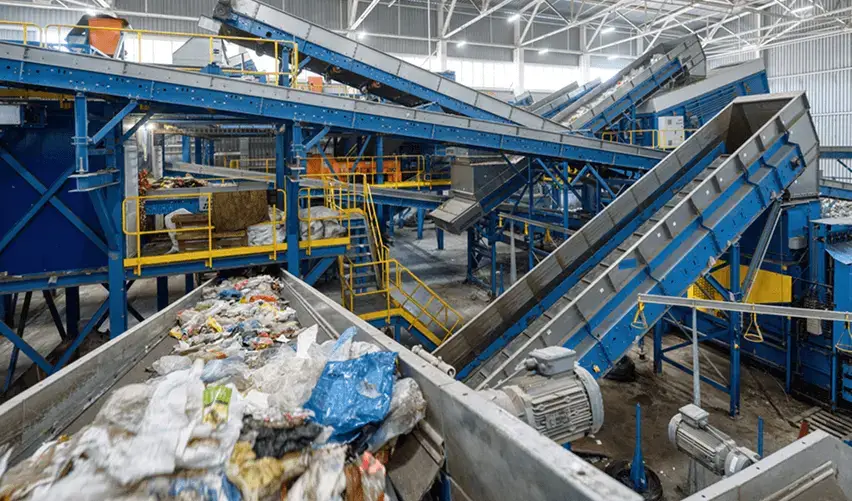
The Scale of Plastic Waste
Plastic waste remains one of the defining environmental and industrial challenges of our time. Globally, millions of tons of plastic are discarded annually, often ending up in landfills or polluting marine ecosystems. However, categorizing this simply as "waste" overlooks a massive industrial opportunity.
With advancements in sorting technology and material science, discarded polymers are no longer endpoint liabilities; they are raw material reserves. The transition from a linear "take-make-dispose" model to a circular economy relies heavily on industrial-scale recovery systems that can process complex, multi-layered plastics back into certified, high-purity resins.
Industrial Context
Corporate compliance and Extended Producer Responsibility (EPR) mandates are forcing a massive shift. Manufacturers are no longer just looking to dispose of waste ethically—they are actively seeking high-quality recycled material streams to integrate back into primary production.
Understanding Plastic Resins
Not all plastics are created equal, and their chemical structures dictate how easily they can be recovered. The recycling industry categorizes plastics using a standard resin identification code system.
| Resin Type | Common Uses | Recyclability & Complexity |
|---|---|---|
| PET (Polyethylene Terephthalate) | Water bottles, food containers | High - The most widely recycled plastic. Mechanical recycling processes are highly optimized. |
| HDPE (High-Density Polyethylene) | Milk jugs, shampoo bottles, industrial pipes | High - Excellent structural integrity allows for repeated mechanical recycling. |
| PVC (Polyvinyl Chloride) | Plumbing pipes, medical tubing | Low - Contains toxic additives that make mechanical recycling highly hazardous. |
| PP (Polypropylene) | Automotive parts, food containers, caps | Moderate - Increasing in recyclability due to new sorting technologies. |
The Step-by-Step Mechanical Process
Converting waste into a certified secondary resource requires precision engineering and rigorous quality control. The standard industrial mechanical recycling process follows several highly controlled stages:
- Collection & Aggregation: Materials are sourced from post-consumer networks, industrial scrap, and specialized disassembly lines (such as e-waste facilities).
- Sorting & Segregation: Optical scanners using Near-Infrared (NIR) technology and AI-driven robotics separate plastics by exact polymer type and color at lightning speeds.
- Shredding & Washing: Sorted plastics are ground into uniform flakes. These flakes are subjected to intense friction washing and float-sink tanks to remove contaminants, labels, adhesives, and differing polymer types.
- Melting & Compounding: Clean flakes are melted down. At this stage, additives can be introduced to restore structural integrity or alter the color.
- Extrusion: The molten plastic is filtered for microscopic impurities and extruded into uniform pellets (nurdles), which are packaged and sold back to manufacturers as secondary raw material.
"Effective recycling is no longer just about disposal. It is about precision engineering to extract maximum value from existing material lifecycles."
Advanced Innovations
While mechanical recycling is highly effective for clean, single-stream plastics like PET and HDPE, it struggles with contaminated, degraded, or multi-layered plastics. This is where advanced (or chemical) recycling steps in.
Pyrolysis and Depolymerization: Instead of melting the plastic, chemical recycling uses heat or chemical solvents to break the polymers back down into their original molecular monomers. These monomers can then be used to create virgin-quality plastic, effectively creating an infinite loop for materials that were previously considered non-recyclable.
The Circular Economy Future
As Extended Producer Responsibility (EPR) mandates tighten globally, the reliance on virgin plastics will inevitably decrease. The challenge is no longer just public awareness; it is building the physical infrastructure capable of handling the volume and complexity of modern plastic waste.
Companies that proactively integrate traceable, high-quality recycled resins into their supply chains today will hold a massive competitive advantage in the highly regulated, environmentally conscious markets of tomorrow.
Key Takeaways
- Plastic waste is an untapped industrial reserve, not a terminal liability.
- Modern recycling relies on advanced NIR optical sorting, precision extrusion, and rigorous decontamination.
- Different polymers require entirely different recovery pathways; PET and HDPE are currently the most viable for closed-loop mechanical recycling.
- Chemical recycling is unlocking the ability to process previously unrecyclable multi-layered and degraded plastics.
- Proactive integration of recycled materials ensures regulatory compliance and long-term supply chain resilience.