
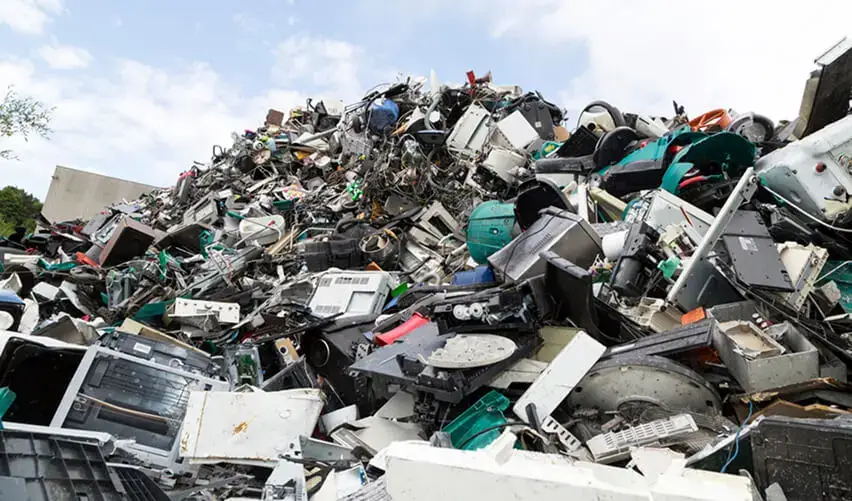
The Rising Tide of E-Waste
India is currently the third-largest generator of e-waste globally, producing millions of tonnes of discarded electronic devices annually. As the nation accelerates its digital transformation, the byproduct of this rapid technological boom is an unprecedented, mounting pile of end-of-life electronics.
The Resource Paradigm
E-waste is not just a toxic hazard; it is a high-yield urban mine. Discarded electronics contain precious metals like gold, silver, copper, and palladium, alongside critical rare earth elements that are absolutely essential for future clean-energy manufacturing.
Key Drivers of Generation
The exponential growth of electronic waste in India is fueled by a combination of economic expansion, rapid technological advancements, and shifting behavioral factors:
| Driver | Impact on E-Waste Volume |
|---|---|
| Planned Obsolescence | Shorter product lifecycles for smartphones and laptops mean devices are discarded and replaced at much higher frequencies than in previous decades. |
| Digital Penetration | Rising disposable incomes and affordable internet access have pushed heavy electronics consumption deep into Tier 2 and Tier 3 cities across the country. |
| Technological Shifts | Transitions like the 4G to 5G network rollout instantly render millions of older consumer handsets and commercial networking devices obsolete. |
The Informal Sector Challenge
Historically, over 90% of India's e-waste has been collected and processed by the informal sector. While these networks are highly efficient at door-to-door collection, their downstream processing methods—such as open-air incineration and crude acid leaching to extract precious metals—are catastrophic.
These rudimentary techniques release highly toxic heavy metals like lead, mercury, and cadmium into the soil and groundwater. This poses severe health risks to the workers and surrounding communities while achieving a very low overall material recovery rate.
"The solution to the e-waste crisis requires shifting volume from fragmented, hazardous informal networks into transparent, high-efficiency industrial recovery systems."
Building Formal Infrastructure
To combat this, the Indian government has aggressively updated the E-Waste (Management) Rules, placing the onus of end-of-life processing squarely on electronics manufacturers through Extended Producer Responsibility (EPR) mandates.
However, legislation alone is insufficient without the physical infrastructure to execute it at scale. This is where organizations like ELIMA step in. By building state-of-the-art Material Recovery Facilities, ELIMA provides the technology required to safely dismantle, shred, and segregate complex electronics, ensuring toxins are neutralized and valuable materials are recaptured with industrial precision.
The Path Forward
Solving India's e-waste challenge is a multi-stakeholder effort. It requires consumers to utilize formalized take-back programs, manufacturers to design products for circularity, and infrastructure partners to build the recovery networks capable of handling the volume.
By transitioning e-waste from an environmental liability into a certified secondary supply chain, India can secure its material independence while building a cleaner, circular manufacturing ecosystem.
Key Takeaways
- India is the third-largest global generator of e-waste, driven by digital expansion and shorter product lifecycles.
- Over 90% of e-waste is currently handled by the informal sector using highly hazardous extraction methods.
- E-waste is a rich source of critical metals; urban mining is more efficient and environmentally friendly than virgin ore extraction.
- EPR mandates are shifting the responsibility to manufacturers, requiring them to partner with certified formal recyclers.
- Building large-scale, formal material recovery infrastructure is essential for safe processing and supply chain circularity.