
An old laptop sitting in a warehouse may look like obsolete equipment.
A damaged server may look like scrap.
A discarded smartphone may seem to have no value left.
But electronic products can contain something that remains valuable long after the device itself has reached the end of its useful life: materials.
Electronics contain a combination of metals, plastics, glass and other components that were extracted, processed and manufactured into the product in the first place. When the product can no longer be reused or refurbished, some of these materials can be recovered and returned to productive use.
This is one of the reasons e-waste recycling is becoming increasingly important.
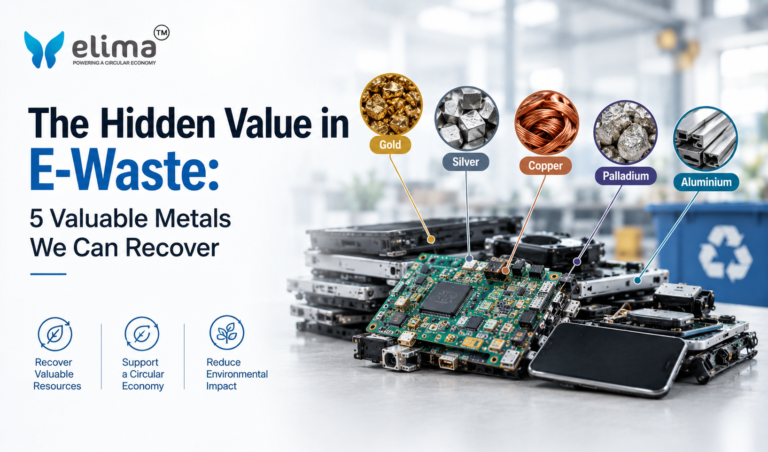
Among the materials found in electronic equipment, metals such as gold, silver, copper, palladium and aluminium are particularly important because of their applications, properties and recovery potential.
For businesses managing large volumes of IT equipment, understanding this material value is an important part of moving from simple disposal towards a more complete IT Asset Lifecycle Management approach.
Table of Contents
ToggleElectronic devices need materials with specific physical and chemical properties.
Metals are used because they can provide:
A single electronic device can therefore contain several different metals, each performing a specific function.
A laptop may contain copper wiring, aluminium components and small quantities of precious metals in its circuit boards and connectors.
A server can contain copper, aluminium, steel and other materials across its power systems, circuit boards, cables and structural components.
The quantity of each metal varies depending on the product, model, technology and manufacturing process.
However, when large volumes of electronics are collected and processed, these materials can represent a significant secondary resource.
Gold is one of the most well-known valuable metals found in electronic equipment.
Its excellent electrical conductivity and resistance to corrosion make it useful in applications where reliable electrical connections are important.
Gold can be found in:
The quantity of gold in an individual device is generally small, but its material value makes it an important target for recovery when electronic equipment is processed at scale.
Electronic connections need to remain reliable over time.
Gold resists corrosion and oxidation, allowing it to maintain good electrical contact under conditions where other materials may degrade.
This makes it particularly useful for selected high-reliability electronic applications.
Silver is another valuable metal used across electrical and electronic applications.
It has extremely high electrical and thermal conductivity, which makes it useful in a range of specialised applications.
Silver can be found in:
Although consumers often associate silver with jewellery, its industrial applications are extensive.
When electronic products reach the end of their useful life, recovering the silver they contain can help return this material to the wider resource cycle.
Copper may not have the same value per kilogram as precious metals, but it is one of the most important materials recovered from electronic equipment because of the quantities used.
Its excellent electrical conductivity makes it essential to modern electronics.
Copper is commonly found in:
An electronic device can contain copper across several different components.
When thousands of devices are processed, the cumulative quantity can become significant.
Copper can be recycled and returned to manufacturing while retaining many of its important properties.
Recovering copper from retired electronics therefore provides a source of secondary material that can supplement primary production.
This is a practical example of how material recovery can support circular resource use.
Palladium belongs to the platinum group of metals and is used in certain electronic applications because of its electrical and chemical properties.
It can be present in:
Palladium is generally present in relatively small quantities, which makes its recovery more technically demanding.
However, its high value means that specialised recovery processes can make it an important material within electronic recycling streams.
As with other precious metals, the ability to recover palladium depends on factors such as the type of equipment being processed, material concentration and available processing technology.
Aluminium is one of the most widely used metals in electronic and electrical products.
Its value comes from a combination of properties including:
It can be found in:
Unlike precious metals, aluminium is generally recovered because of the large quantities used across products.
It is also an important example of how common industrial metals can play a major role in circular material flows.
Recovering metals from electronic equipment involves several stages.
The process varies depending on the product and material, but typically includes:
Electronic equipment is collected from businesses, households, institutions, warehouses and other sources.
Equipment is separated according to product category, material composition and processing requirements.
Products are dismantled to separate components such as circuit boards, cables, batteries, housings and other assemblies.
Different material streams are separated using mechanical and specialised processes.
Ferrous metals, non-ferrous metals, plastics and other materials can then be directed towards appropriate recovery pathways.
Depending on the material, recovery may involve mechanical, thermal, chemical or metallurgical processes.
Recovered metals may undergo further processing to achieve the purity required for their next application.
The objective is not simply to extract metals.
It is to recover them in a form that can potentially re-enter productive material cycles.
The value of metal recovery goes beyond the market price of individual metals.
Recovering materials from electronic products can help:
Materials that have already been extracted and processed can remain within the economy instead of being lost at the end of a product’s lifecycle.
Secondary materials can supplement raw materials obtained through primary extraction.
Recovered metals can become inputs for future manufacturing processes.
Electronics contain multiple material streams. Recovering metals alongside plastics, glass and other components helps maximise the overall recovery potential of the product.
Better recovery means more value can be obtained from the resources already embedded in products.
Traditional mining extracts materials from geological deposits.
Urban mining looks at another source: materials already embedded in products, infrastructure and discarded equipment.
Electronic products are particularly interesting because they contain multiple materials in relatively concentrated assemblies.
Consider an enterprise that retires thousands of laptops, servers and networking devices.
Those assets may contain:
Individually, the quantities may appear small.
At scale, however, these assets represent a significant pool of materials that have already entered the economy.
Urban mining provides a framework for thinking about how those resources can be recovered rather than lost.
There is an important distinction between recycling a device and recovering value from a device.
A laptop that still functions does not necessarily need to be dismantled.
It may be:
Reused → Repaired → Refurbished → Redeployed → Recycled
This hierarchy helps preserve value at different stages of the product lifecycle.
For example, refurbishing a functioning laptop preserves the value of the complete product.
Recovering a working component preserves less value, but may still be preferable to material recycling.
Material recovery becomes the appropriate pathway when the product and its components can no longer provide useful service.
This principle is particularly important for enterprises managing large IT estates.
IT Asset Disposition (ITAD) is often associated with retiring computers, servers and other technology securely.
But modern ITAD can extend beyond disposal.
A structured ITAD process can determine what should happen to an asset after it leaves active use.
An asset may be:
This creates a direct connection between IT Asset Lifecycle Management and the circular economy.
The physical device is assessed first.
Its data is securely managed.
Its remaining functional value is considered.
And only when continued use is no longer viable does the focus shift towards recovering its components and materials.
This lifecycle approach helps ensure that valuable resources are not lost simply because a device has reached the end of its first use.
Electronic devices contain far more than the technology we see on the outside. Gold, silver, copper, palladium and aluminium are among the valuable materials that can be recovered when products reach the end of their useful life. The real opportunity lies in managing these products through a hierarchy of reuse, refurbishment, component recovery and finally material recovery, rather than treating every retired device as waste. As electronic consumption grows, e-waste recycling, urban mining and IT Asset Lifecycle Management can work together to keep more of these resources in circulation.
A device may become obsolete. Its materials don’t have to.